Los Angeles bathroom design isn’t just about following national trends, it’s shaped by the city’s unique climate, water conservation mandates, and an architectural mix that spans Spanish Colonial to mid-century modern. Whether someone’s renovating a 1920s Craftsman in Pasadena or a condo in West Hollywood, the approach differs from what works in Atlanta or Chicago. This guide walks through what makes LA bathrooms distinctive, covers popular local styles, and breaks down the practical steps, from permits to budgets, needed to pull off a successful renovation.
Table of Contents
ToggleKey Takeaways
- Los Angeles bathroom design must account for water conservation mandates, earthquake resilience, and the city’s architectural diversity—from Spanish Colonial to mid-century modern—making LA’s approach distinctly different from other regions.
- California’s strict WaterSense efficiency standards require showerheads at 2.0 GPM or less, faucets at 1.2 GPM, and toilets at 1.28 GPF; homeowners should verify compliance labels before purchasing fixtures for their bathroom design projects.
- Most LA bathroom renovations require permits when involving plumbing, electrical, or structural changes, with inspections at rough-ins, waterproofing, and final stages; plan for 2-4 weeks for plan-check permits and budget $200-$600 for permit fees.
- Mid-range bathroom renovations in Los Angeles typically cost $12,000-$25,000 for a 50-75 square foot space, with labor representing roughly half; always set aside 15-20% contingency for unexpected issues like rotted subfloors or asbestos abatement.
- Proper waterproofing using liquid or sheet membranes on all wet-area walls (72 inches high in showers) and correct ventilation meeting Title 24 standards are non-negotiable to prevent costly mold and water damage.
- Popular LA bathroom styles include modern minimalist designs with floating vanities and large-format tiles, and coastal spa-inspired retreats featuring natural stone, freestanding tubs, and soft color palettes inspired by Malibu and Laguna Beach aesthetics.
Why Los Angeles Bathroom Design Trends Are Unique
LA’s bathroom design landscape is influenced by factors that don’t apply everywhere. The Mediterranean climate means year-round humidity control isn’t as critical as proper ventilation during rare damp winter months. But, the city’s ongoing water scarcity issues push homeowners toward low-flow fixtures, dual-flush toilets rated at 1.28 gallons per flush or less, and aerators that meet California’s strict efficiency standards.
The architectural diversity also plays a role. Spanish Revival homes often feature tile work that references traditional Mexican or Moorish patterns, while mid-century ranches lean toward clean lines and terrazzo. Post-2010 construction in neighborhoods like Silver Lake or Echo Park frequently incorporates industrial elements, concrete counters, exposed piping, matte black fixtures.
Earthquake resilience is another consideration unique to the region. Tile installations require flexible thinset and grout to handle minor structural shifts. Heavy stone vanities need proper anchoring to wall studs, and freestanding tubs should be secured if placed on upper floors. While not always front-of-mind during design, these details matter during inspections and long-term durability.
Finally, LA’s proximity to the Pacific influences color palettes and material choices. Homeowners gravitate toward coastal neutrals, soft grays, warm whites, sand tones, and natural textures like rattan, teak, and limestone that echo beachside aesthetics even miles inland.
Popular Bathroom Design Styles in Los Angeles Homes
Modern Minimalist Bathrooms
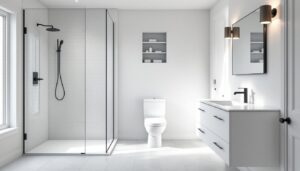
This style dominates newer construction and gut renovations across LA’s Westside and Downtown lofts. The hallmarks: wall-mounted vanities (typically 30-60 inches wide), floating shelves in place of upper cabinets, and frameless glass shower enclosures with minimal hardware.
Material choices skew toward large-format porcelain tiles, 12×24 inches or larger, in matte finishes to reduce grout lines and create visual continuity. Countertops are often quartz slabs in solid colors (white, gray, charcoal) with integrated sinks to eliminate seams. Fixtures come in brushed nickel, matte black, or polished chrome, with single-lever faucets and linear drains in curbless showers.
Lighting is recessed and layered: 4-inch LED cans for general illumination, sconces flanking mirrors at 60-65 inches above finished floor, and under-cabinet LED strips if storage allows. The overall effect is clean, uncluttered, and easy to maintain, ideal for busy professionals who want a spa feel without the upkeep.
California Coastal and Spa-Inspired Retreats
This approach borrows from high-end resorts in Malibu and Laguna Beach. Think natural stone accents (travertine, marble, slate), wood-look porcelain planks, and organic textures. Freestanding soaking tubs, often 60-67 inches long, are positioned near windows when privacy allows, sometimes with deck-mounted fillers to avoid wall penetrations.
Color schemes pull from the coast: soft blues, seafoam greens, sandy beiges, and crisp whites. Shiplap or tongue-and-groove paneling (actual wood or moisture-resistant MDF) appears on accent walls, though it requires proper sealing and ventilation to prevent warping in steamy conditions.
Plant life is common, pothos, snake plants, or bamboo in ceramic pots, but placement matters. Keep greenery away from direct shower spray and ensure adequate natural or grow-light exposure. Vanities in this style often use reclaimed wood bases (sealed with marine-grade polyurethane) paired with vessel sinks in ceramic or natural stone.
Many homeowners explore design sourcebooks for fixture and material combinations that balance aesthetics with California’s efficiency requirements.
Essential Elements for a Successful LA Bathroom Renovation
A solid renovation starts with accurate measurements and layout planning. Standard LA bathrooms range from 35-40 square feet (powder rooms) to 75-100 square feet (primary baths). Before ripping out fixtures, confirm the locations of existing plumbing rough-ins and electrical boxes. Moving a toilet more than a few inches often means breaking into the slab or joists, work that requires permits and adds cost.
Ventilation is non-negotiable. California’s Title 24 energy code mandates either an operable window (minimum 3 square feet of glazing, half of which opens) or a mechanical exhaust fan rated for the room’s cubic footage. A 50-square-foot bathroom needs at least 50 CFM (cubic feet per minute). Fans should vent to the exterior, not into attics, and use insulated ducting to prevent condensation.
Waterproofing can’t be skipped. Use a liquid or sheet membrane on all wet-area walls (at least 72 inches high in shower zones) and across the entire floor. Overlap seams by 2 inches, seal penetrations around drains and valve bodies, and let the membrane cure fully before tile installation. Skipping or rushing this step leads to mold, rot, and expensive callbacks.
Fixture selection should balance style and compliance. California requires WaterSense-labeled products: showerheads at 2.0 GPM or less, faucets at 1.2 GPM, toilets at 1.28 GPF or dual-flush equivalents. Popular manufacturers like Kohler, Delta, and Toto offer LA-compliant lines: check the label or spec sheet before purchasing.
Finally, lighting and electrical upgrades often accompany renovations. GFCI-protected outlets are required within 3 feet of any sink (per NEC Article 210.8). If adding heated floors, a dedicated 15- or 20-amp circuit is needed, and the thermostat must be accessible (not behind a door swing). Homeowners frequently browse interior design galleries to visualize fixture and lighting arrangements before committing to layouts.
Navigating Los Angeles Building Codes and Permits
Most bathroom renovations in LA require a permit if they involve plumbing, electrical, or structural changes. Re-tiling a shower, replacing a vanity, or swapping a toilet generally needs a permit. Painting, replacing a mirror, or installing a new light fixture (on an existing box) typically doesn’t, but check with the local building and safety office to confirm.
The permit process starts with submitting plans to the LA Department of Building and Safety (LADBS). For straightforward remodels, homeowners can often use over-the-counter (OTC) permit service, which offers same-day approval if drawings meet code. Plans should include a floor plan showing fixture locations, a plumbing diagram with drain and supply lines, an electrical plan with outlet and fixture placements, and notes on ventilation and waterproofing methods.
Inspections occur at key milestones: rough plumbing and electrical (before walls close up), waterproofing/shower pan (before tile), and final (after all fixtures and finishes are installed). Inspectors check for proper slope on shower floors (1/4 inch per foot toward the drain), correct fastener spacing on cement board (8 inches on-center for walls), GFCI protection, and vent termination.
If the bathroom is in a historic district (e.g., parts of Highland Park, West Adams), additional Historic Preservation Overlay Zone (HPOZ) review may apply, especially for exterior changes like new windows or vent hoods. Some homeowners explore remodel project galleries to see code-compliant solutions others have implemented in similar neighborhoods.
Permit timelines vary. OTC approvals can happen in a day: plan-check permits may take 2-4 weeks depending on backlog. Budget for permit fees (typically $200-$600 for a standard bathroom, more if structural work is involved) and factor in inspection scheduling, inspectors often book 1-2 days out.
Budget Planning for Your Bathroom Design Project
A realistic budget starts with knowing the scope. In LA, a cosmetic refresh, new paint, fixtures, mirror, lighting, runs $2,000-$5,000 for a small bath if doing most of the labor yourself. A mid-range renovation, new tile, vanity, toilet, tub/shower, flooring, and updated plumbing/electrical, typically lands between $12,000-$25,000 for a 50-75 square foot space, with labor accounting for roughly half.
High-end remodels with custom cabinetry, natural stone slabs, frameless glass, and designer fixtures can easily exceed $35,000-$50,000+ in metro LA, where contractor rates run $75-$150/hour and material markups reflect local demand.
Break costs into categories:
- Demo and haul-away: $500-$1,200
- Plumbing (rough-in and fixture install): $2,500-$5,000
- Electrical (wiring, outlets, lighting): $1,000-$2,500
- Tile (material + labor): $8-$25/sq ft installed, depending on tile type and pattern complexity
- Vanity and countertop: $800-$4,000
- Toilet, tub/shower, faucets: $1,200-$5,000 combined
- Flooring (if different from walls): $6-$15/sq ft installed
- Paint and trim: $400-$800
- Permits and inspections: $200-$600
Contingency is critical, set aside 15-20% of the total for surprises like rotted subfloor, outdated galvanized supply lines, or asbestos-containing materials in pre-1980 homes (abatement alone can cost $1,500-$3,000).
DIY vs. hiring out: Demolition, painting, and simple fixture swaps are DIY-friendly with basic tools (reciprocating saw, drill, level, adjustable wrench). Tile-setting, plumbing rough-in, and electrical work benefit from experience, mistakes here cost more to fix than hiring a pro upfront. If going the DIY route on tile, rent a wet saw ($50-$75/day) for clean cuts and invest in a laser level to keep rows straight.
Material costs fluctuate. As of early 2026, lumber and cement board prices have stabilized post-pandemic, but natural stone and high-end fixtures remain premium-priced. Shop local tile suppliers in LA’s Arts District or online for closeouts, leftover lot deals can save 30-50% on name-brand porcelain and ceramic.