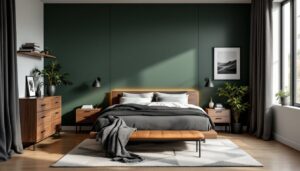
Designing a men’s bedroom isn’t about piling on leather furniture and calling it done. It’s about creating a space that actually works, where function meets personal style without veering into showroom territory. Whether the goal is a minimalist retreat or a layered, textured space, the key is intentional choices: colors that don’t feel dated in six months, furniture that fits the room’s flow, and lighting that adapts to different needs. This guide walks through practical decisions that shape a bedroom into something both comfortable and sharp, from foundational color strategies to the finishing details that make the space feel complete.
Table of Contents
ToggleKey Takeaways
- Men’s bedroom design succeeds when neutral color palettes like charcoal gray, navy, and taupe create a flexible foundation that pairs with various accent colors and materials.
- Strategic bed placement against the longest wall with clear sightlines to the door, combined with 24-30 inches of side clearance, opens up floor space and improves room flow.
- Layering textures through quality bedding, wool rugs, wood accents, and subtle leather elements transforms a flat space into an intentional, sophisticated bedroom.
- Multi-source lighting with dimmers, task lighting for reading, and warm color temperatures (2700-3000K) creates both function and relaxation without harsh overhead fixtures.
- Effective storage using under-bed bins, optimized closets with doubled rods, floating shelves, and dedicated dresser organization keeps surfaces clear and makes the room feel larger.
- Personal style in men’s bedroom design relies on curated elements like one or two large-scale artworks, low-maintenance plants, and purposeful accents rather than excessive decoration.
Choosing the Right Color Palette for a Masculine Bedroom
Start with a neutral base and build from there. Charcoal gray, deep navy, warm taupe, or slate anchor a room without limiting options down the line. These tones pair well with a range of accent colors and materials, making them flexible as tastes evolve.
Avoid stark white walls unless the room gets excellent natural light, otherwise, they can feel sterile. Instead, opt for off-white or greige (gray-beige) tones if a lighter palette is preferred. These softer neutrals add warmth without sacrificing the clean, modern look.
Accent walls work well in bedrooms, especially behind the bed. A deep forest green, charcoal, or even a matte black can add depth without overwhelming the space. When painting, use flat or matte finishes for walls to minimize light reflection and create a more sophisticated appearance. Semi-gloss is reserved for trim and doors.
For those considering darker tones like black or deep charcoal, pairing them with lighter flooring options prevents the room from feeling like a cave. Balance is critical, dark walls benefit from lighter bedding, rugs, or furniture to maintain visual interest.
Color psychology matters in bedrooms. Blues and greens promote calm and focus, while earth tones (browns, tans, deep olives) create grounded, comfortable environments. Avoid overly saturated reds or bright oranges in large doses, they’re activating colors that can interfere with relaxation.
Essential Furniture and Layout Tips
Bed placement dictates everything else. Ideally, the bed sits against the longest wall with clear sightlines to the door, this feels instinctively secure and opens up floor space. Leave at least 24-30 inches on each side for easy access and nightstand placement.
Choose a platform bed or low-profile frame for a modern, masculine aesthetic. These sit closer to the ground and eliminate the need for a box spring. Solid wood (walnut, oak) or metal frames (steel, iron) offer durability and visual weight. Upholstered headboards in leather or linen add softness without sacrificing style.
Nightstands should be proportional to the bed height, aim for the top surface to sit level with or slightly below the mattress top. Matching nightstands create symmetry, but mixing materials (wood on one side, metal on the other) adds interest if the styles complement each other.
If space allows, add a bench or low dresser at the foot of the bed. This provides a landing spot for clothes or bags and visually anchors the bed. In smaller rooms (under 120 square feet), skip the bench and use wall-mounted hooks or a valet stand instead.
Avoid pushing all furniture against the walls. Floating the bed a few inches away from the wall (if the room is large enough) and creating small walking paths around key pieces improves flow. In larger bedrooms, consider defining zones, sleeping area, dressing area, reading nook, using rugs or furniture groupings.
Dressers and storage furniture should complement the bed frame material. A room with a dark wood bed benefits from a matching or similarly toned dresser. Metal bed frames pair well with industrial-style dressers or painted wood pieces.
Incorporating Texture and Materials
Texture is what separates a flat, uninspired room from one that feels intentional and layered. In men’s bedroom design, mixing tactile elements prevents spaces from reading as cold or impersonal.
Bedding is the easiest place to introduce texture. Layer a cotton or linen duvet with a chunky knit throw or a waffle-weave blanket at the foot of the bed. Avoid overly fussy bedding, stick to solid colors or subtle patterns like ticking stripes or herringbone. Thread count matters less than fabric quality: 300-400 thread count cotton percale or sateen strikes the right balance between breathability and durability.
Rugs anchor a space and soften hard flooring. A low-pile wool rug or flatweave kilim in a neutral or geometric pattern works well under the bed, extending 18-24 inches beyond each side. In high-traffic areas, skip shag or high-pile rugs, they collect dust and show wear quickly.
Wood accents add warmth. This can come from a reclaimed wood accent wall, a live-edge floating shelf, or a solid wood dresser. If the room already features wood flooring, vary the tone, light floors pair well with darker wood furniture and vice versa.
Metal finishes (matte black, brushed steel, aged bronze) introduce industrial or modern elements. These work well in light fixtures, drawer pulls, bed frames, and curtain rods. Stick to one or two metal finishes throughout the room to maintain cohesion.
Leather and suede bring in organic, masculine textures without feeling heavy-handed. A leather bench, suede throw pillows, or a leather-wrapped dresser handle add subtle sophistication. Avoid matching everything, one or two leather accents per room is plenty.
Design trends in 2026 lean toward natural materials and sustainable choices, so incorporating linen, jute, cork, or bamboo accents feels both current and timeless.
Lighting Solutions for Function and Ambiance
Good lighting in a bedroom means having multiple sources on separate circuits or switches. A single overhead fixture doesn’t cut it, bedrooms need task lighting, ambient lighting, and accent lighting to function properly.
Overhead lighting should be on a dimmer. If the room has an existing ceiling fixture, replace builder-grade options with a modern flush-mount or semi-flush fixture in metal or wood. For higher ceilings (9 feet or more), consider a simple pendant or drum shade fixture. Avoid chandeliers unless the room is large and formal.
Task lighting for bedside reading is non-negotiable. Swing-arm wall sconces mounted on either side of the bed save nightstand space and direct light exactly where it’s needed. Aim for 40-60 watts (or LED equivalent) to provide enough light for reading without glare. If wall-mounting isn’t an option, use adjustable table lamps with fabric or metal shades that direct light downward.
Ambient lighting sets the mood. This can come from LED strip lights behind the headboard or under floating nightstands, providing a soft glow without harsh brightness. Warmer color temperatures (2700-3000K) mimic natural light and promote relaxation. Cool white (4000K+) is too harsh for bedrooms.
If natural light is limited, layer in additional ambient sources like a floor lamp in a corner or a table lamp on a dresser. These fill in shadows and make the room feel more balanced. For complete control over ambient bedroom lighting, install smart bulbs that adjust color temperature and brightness via app or voice control.
Window treatments control natural light. Blackout curtains or cellular shades are essential for quality sleep, especially in urban areas with streetlights. Layer blackout liners behind linen or cotton curtains for a softer daytime look that still blocks light at night. Curtain rods should extend 4-6 inches beyond each side of the window frame to allow curtains to fully clear the glass when open.
Storage and Organization Strategies
Visible clutter kills a bedroom’s vibe. Effective storage keeps surfaces clear and makes the space feel larger and more intentional.
Start with under-bed storage. Platform beds with built-in drawers are ideal, but if the bed frame doesn’t include storage, use low-profile rolling bins (6-8 inches tall) for off-season clothes, extra bedding, or shoes. Label bins to avoid digging through everything.
Closets should be maximized. Add a second hanging rod below the existing one for shirts and pants, this doubles capacity. Use matching hangers (wood or slim velvet) to create visual order and prevent clothes from slipping off. Install a closet organizer system with adjustable shelves and rods if the closet is a basic builder-grade setup with one rod and a shelf.
If closet space is limited, consider a freestanding wardrobe or armoire in wood or metal. These add storage without requiring installation and can double as a design statement.
Dressers should have dedicated purposes. Top drawers for daily essentials (wallet, keys, watch), middle drawers for underwear and socks, and bottom drawers for bulkier items like sweaters. Use drawer dividers to keep small items organized.
Vertical storage takes advantage of unused wall space. Install floating shelves (¾-inch thick solid wood or metal brackets) for books, plants, or decorative objects. Keep shelves between eye level and 6 feet high for easy access. Over-the-door hooks or a wall-mounted valet for jackets and bags keep these items off chairs and floors.
A bedside catchall, a small tray or dish on the nightstand, corrals everyday items like a phone, glasses, or watch. This keeps the nightstand surface from becoming a dumping ground.
Adding Personal Style and Finishing Touches
Personal style in a bedroom doesn’t mean covering every wall with posters or memorabilia. It’s about curated elements that reflect interests and experiences without cluttering the space.
Artwork should be intentional. One or two large-scale pieces (24×36 inches or larger) make more impact than a gallery wall of small frames. Black-and-white photography, abstract prints, or landscape art in simple frames (wood, metal, or black matte) keep the look clean. Hang art at eye level (57-60 inches from the floor to the center of the frame).
If displaying collections (watches, vinyl records, vintage cameras), use shadow boxes or dedicated shelving rather than scattering items across surfaces. A high-tech bedroom setup might include a wall-mounted tablet or smart display that cycles through digital art or personal photos.
Plants add life and improve air quality. Low-maintenance options like snake plants, pothos, or ZZ plants tolerate low light and infrequent watering. Use ceramic or concrete planters in neutral tones. Avoid small plants on multiple surfaces, one or two larger plants (in 8-10 inch pots) have more visual weight.
Books should be displayed purposefully. Stack a few hardcovers on the nightstand or dresser, or line a floating shelf with spines organized by color or size. Avoid letting paperbacks pile up randomly.
Scent is often overlooked but contributes to the room’s overall feel. A simple reed diffuser or candle in wood, leather, or citrus scents keeps the space fresh without being overpowering. Avoid synthetic air fresheners.
For color choices that support a cohesive look, consider how bedroom paint colors interact with natural light and existing furniture.
Window treatments double as design elements. Heavy linen or canvas curtains in charcoal, navy, or tan add texture and frame windows cleanly. Mount rods close to the ceiling (within 2-4 inches) to make ceilings appear higher.
Finally, avoid overdecorating. Men’s bedroom design benefits from restraint, every item should serve a purpose or hold personal meaning. If something doesn’t fit either criterion, leave it out.
Conclusion
A well-designed men’s bedroom balances function, style, and personal expression without unnecessary complexity. The foundation lies in smart color choices, intentional furniture placement, and layered textures that add depth. Lighting adapted to different needs, efficient storage systems, and curated personal touches complete the space. These aren’t trends that expire in a season, they’re practical decisions that shape how a room feels and performs daily. When each element serves a clear purpose, the result is a bedroom that’s both livable and sharp.