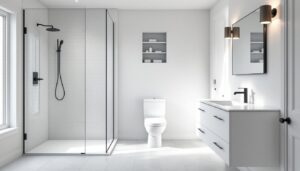
Japanese bathroom design blends function, natural beauty, and ritual into spaces that feel like private retreats. Unlike standard Western bathrooms focused on efficiency, Japanese design treats bathing as a meditative practice, one that deserves intentional materials, careful proportion, and a deep connection to nature. The result? Bathrooms that are calm, uncluttered, and built to last. This guide walks through the core principles, materials, and practical choices needed to bring authentic Japanese design into a home, whether working with a spacious master bath or a compact powder room.
Table of Contents
ToggleKey Takeaways
- Japanese bathroom design separates wet and dry zones, allowing multiple family members to use different areas simultaneously while maintaining hygiene and heat efficiency.
- Natural materials like hinoki cypress, stone, and bamboo are central to authentic Japanese bathroom design, offering durability, moisture resistance, and timeless aesthetics.
- An ofuro soaking tub—typically 22–28 inches deep and 48–60 inches long—is the centerpiece of Japanese bathroom design, designed for seated immersion rather than stretching out.
- Minimalist fixtures with clean lines, such as floating vanities and wall-mounted toilets, reduce visual clutter and make Japanese bathrooms easier to clean and maintain.
- Japanese bathroom design works in small spaces by strategically separating functional zones, using large-format tiles to reduce visual complexity, and prioritizing soft, layered lighting.
- The traditional kakeyu principle requires bathers to rinse thoroughly before entering the tub, keeping water pristine for reuse by other family members or for laundry.
What Makes Japanese Bathroom Design Unique?
Japanese bathrooms separate wet and dry zones by design philosophy, not just convenience. The traditional layout includes a separate toilet room, a washing/prep area with a sink and vanity, and a dedicated bathing room with a shower and soaking tub. This separation maintains hygiene, preserves heat in the bathing space, and lets multiple people use different zones simultaneously.
The bathing room itself follows the principle of kakeyu, rinsing outside the tub before soaking. Bathers sit on a low stool, wash thoroughly with soap and water, then enter the tub only after they’re clean. The tub water stays pristine and can be reused by other family members or recycled for laundry, a practice rooted in both respect and resource conservation.
Materials and finishes prioritize durability in humid environments. Walls often feature water-resistant tile, natural stone, or hinoki cypress paneling, which resists mold and emits a subtle, calming fragrance when wet. Floors are typically non-slip tile or stone with integrated drainage, designed to handle standing water without damage. It’s common to see floor drains positioned strategically so the entire room can be hosed down for cleaning, a practice that would damage most Western bathrooms but is standard in Japanese design.
Essential Elements of Japanese Bathroom Design
Natural Materials and Earthy Textures
Authentic Japanese bathrooms lean heavily on wood, stone, and bamboo. Hinoki cypress is the gold standard for soaking tubs and wall panels due to its natural antimicrobial properties and resistance to rot. Expect to pay $2,000–$8,000 for a quality hinoki tub, depending on size and craftsmanship. Alternatives like Western red cedar or teak offer similar moisture resistance at lower price points, though they lack hinoki’s signature scent.
For countertops and flooring, materials like granite, river stone, or slate provide slip resistance and visual warmth. Pebble tile, either natural stone or porcelain replicas, works well for shower floors and adds textural interest. Bamboo can be used for accessories (stools, shelving, bath mats) but should be sealed properly to prevent splitting in high-moisture areas.
Avoid synthetic materials that read as plastic or laminate. Japanese design values natural materials and authentic textures that age gracefully rather than wear out. If budget limits the use of real wood or stone, prioritize it in high-touch areas like the tub surround or a feature wall, and use high-quality porcelain tile that mimics natural materials elsewhere.
Minimalist Fixtures and Clean Lines
Japanese bathrooms strip away visual clutter. Fixtures should be wall-mounted where possible, floating vanities, wall-hung toilets, and recessed medicine cabinets keep floor space open and simplify cleaning. Faucets and showerheads tend toward simple, geometric forms in matte black, brushed nickel, or oil-rubbed bronze rather than ornate chrome.
A handheld showerhead on a slide bar is essential for the traditional washing ritual. Pair it with a low wooden or acrylic stool (typically 10–12 inches high) and a small basin or bucket for rinsing. These aren’t decorative, they’re functional components of the bathing routine.
Storage should be concealed or minimal. Built-in niches for toiletries, recessed shelving, or a single floating shelf for essentials maintains the uncluttered aesthetic. Open shelving can work if it holds only a few carefully chosen items, a folded towel, a small plant, a ceramic soap dish. Everything else goes behind closed doors.
How to Create a Japanese-Inspired Soaking Experience
The centerpiece of any Japanese bathroom is the ofuro, a deep soaking tub designed for immersion up to the shoulders while seated upright. Standard Western tubs measure 14–16 inches deep: ofuro tubs run 22–28 inches deep and are often compact in length (48–60 inches) to fit smaller footprints. They’re built for soaking, not stretching out.
If a traditional hinoki tub isn’t in the budget, several manufacturers produce Japanese-style soaking tubs in acrylic or composite materials. Look for models with a built-in seat or bench, which mimics the traditional seated posture. Freestanding models offer installation flexibility and strong visual impact, though they require careful floor reinforcement, filled, these tubs can exceed 1,000 pounds.
Installation considerations: Most ofuro tubs need a 220V electric heater or inline water heater to maintain temperature during long soaks. If adding a deep-fill tub, confirm the water heater capacity (typically requires 50+ gallon tank or a tankless system rated for high flow). Check local building codes, some jurisdictions require tempered glass enclosures or specific drain sizes for tubs over a certain volume.
For the washing station, install a handheld shower at approximately 48 inches above finished floor, low enough to use comfortably while seated. Include a thermostatic mixing valve to prevent scalding. The floor should slope gently (1/4 inch per foot) toward a central or linear drain, with a drain capacity of at least 2 inches to handle runoff from both shower and tub overflow.
Incorporating Japanese Design Principles in Small Bathrooms
Japanese design doesn’t require square footage, it requires intention. Small bathrooms can adopt the same principles by focusing on proportion, light, and strategic material use.
Start by separating functions visually if not physically. A glass partition or low pony wall (36–42 inches high) can divide the toilet from the bathing area without adding bulk. Use the same flooring throughout to maintain visual continuity, but change wall treatments to signal different zones, tile in the wet area, wood-look porcelain or paint in the dry zone.
Replace a standard tub-shower combo with a compact ofuro (48-inch models exist) and a separate shower area with a floor drain. This layout uses roughly the same footprint but offers a more authentic soaking experience. Alternatively, a deep, Japanese-style soaking tub can replace a standard 60-inch tub in the same alcove with some plumbing adjustments.
Mirrors and lighting become critical in tight spaces. A large, frameless mirror extends sight lines. Recessed ceiling lights with dimmer controls provide ambient light, while a small accent light (wall-mounted or under-shelf LED) highlights a plant or stone feature. Avoid over-lighting, Japanese bathrooms favor soft, diffused light over bright task lighting.
Keep accessories minimal: one towel bar, one small shelf, no countertop clutter. In cramped quarters, every item either earns its place or creates visual noise.
Color Palettes and Lighting for Authentic Japanese Bathrooms
Japanese bathroom palettes draw from nature: warm wood tones, stone grays, muted greens, and off-whites. Think river rock, aged bamboo, and driftwood, not stark white or bold accent walls. If using tile, consider large-format porcelain in matte finishes (12×24-inch or larger) to reduce grout lines and maintain a calm, continuous surface.
Accent colors should be subtle. A single wall of dark slate tile, a panel of walnut, or charcoal grout against cream tile adds depth without disruption. Avoid high-contrast pairings, Japanese design values gradation and harmony over dramatic statements.
Lighting should layer and soften. Recessed LED downlights (3000K–3500K color temperature) provide general illumination without glare. Add a linear LED strip behind a floating mirror or under a vanity to create ambient glow. In the soaking area, consider a dimmable pendant or wall sconce with a fabric or frosted glass shade to diffuse light.
Natural light is ideal but often limited in bathrooms. If privacy allows, replace a standard window with frosted or textured glass to preserve light while obscuring views. Transom windows above door height bring light from adjacent rooms. For windowless baths, a strategically placed mirror opposite the door can reflect light from the hallway.
Many modern design approaches incorporate smart lighting systems with programmable scenes, bright for morning routines, dim and warm for evening soaks. If going this route, choose fixtures rated for wet or damp locations per NEC Article 410 and ensure all wiring is GFCI-protected.
Safety note: All bathroom lighting and electrical outlets must meet local code. Most jurisdictions require GFCI protection within six feet of water sources and wet-rated fixtures in shower or tub zones. If in doubt, consult a licensed electrician.